
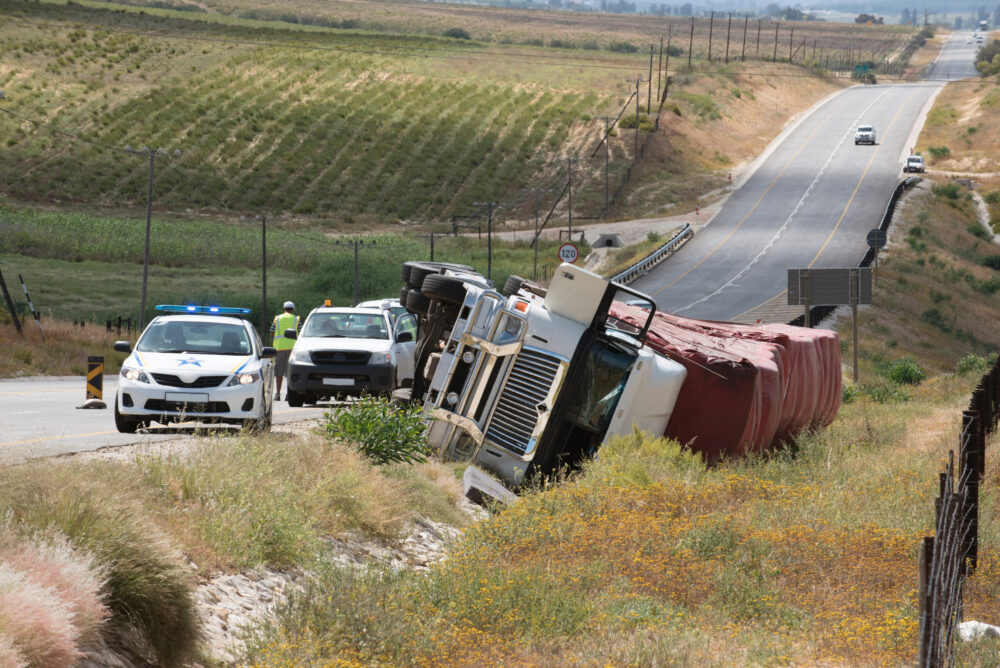
Commercial trucks and standard motor vehicles share many New Jersey roads. But for this to be safe, these drivers must abide by explicit driving rules and regulations. Specifically, commercial truck drivers are arguably held to a higher standard and given a separate subset of laws. If these laws are neglected, they may leave themselves and other innocent drivers vulnerable to a catastrophic collision. That said, please continue reading to learn the laws regulating truck drivers and how an experienced Passaic County truck accident lawyer at the Law Offices of August R. Soltis can help decipher whether any violations triggered your accident event. Truck traffic is particularly dense on Passaic County arteries like I-80, the Garden State Parkway, and Route 46, where strict adherence to NJ DOT standards is required.
What laws are set to regulate truck drivers in the state of New Jersey?
Simply put, New Jersey observes Federal Motor Carrier Safety Administration (FMCSA) regulations, but also enforces state-specific laws to govern truck drivers. Below is a glimpse into these laws:
- FMCSA rules and regulations:
- Hours of service: a truck driver must not drive for longer than 11 hours within a 14-hour shift, and must take 10 hours off duty after a 14-hour shift, for example.
- Vehicle maintenance: a trucking company must conduct routine inspections and maintain detailed records of maintenance history, for example.
- Drug and alcohol testing: a truck driver must submit to a drug and alcohol test before employment, and random tests during employment, for example.
- New Jersey state rules and regulations:
- Weight limits: a truck must not weigh more than 80,000 pounds when navigating certain New Jersey highways, for example.
- Route restrictions: a truck must not pass through certain roads, like residential or environmentally sensitive areas, for example.
- Hazardous materials: a truck driver must obtain certain permits before transporting hazardous materials throughout the state, for example.
Quick Reference: Key NJ Trucking Regulations
To ensure road safety, New Jersey enforces several critical standards for commercial operators. For instance, the Maximum Gross Weight for commercial vehicles on New Jersey Interstate Highways is capped at 80,000 lbs. Additionally, the legal Blood Alcohol Limit (BAC) for CDL holders is strictly set at 0.04%, which is twice as stringent as the standard 0.08% limit for passenger vehicles. Drivers must also remain vigilant regarding regional NJ Route 23 Restrictions, as specific weight limits and specialized regulations are strictly enforced for all commercial traffic traveling north of the I-287 junction.
What if a truck driver causes an accident after a law violation?
These laws are in place for a reason: to prevent truck accidents that are likely catastrophic due to the sheer size and weight of these
Website Designed & Managed by


© 2026 Law Offices of August R. Soltis. All rights reserved. Attorney advertising.